Machine Embroidery Rainbow Design
A Cheerful, Spring-Ready Stitch with Real-World Charm
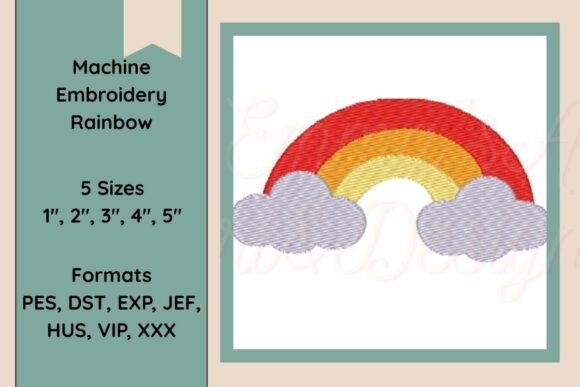
As an embroidery designer who’s stitched everything from boutique baby blankets to Etsy bestsellers, I opened the Machine Embroidery Rainbow Design on Creative Fabrica expecting whimsy—and got something more: a compact, well-balanced design that feels both joyful and intentional. Its visual mood is instantly uplifting—soft cloud shapes frame a bold, simplified rainbow in red, orange, and yellow. There’s no gradient fade or overly complex shading; instead, it leans into clean satin stitch outlines and confident fill stitch areas. That simplicity isn’t a shortcut—it’s smart design thinking. It means fewer thread breaks, smoother transitions across curved surfaces, and faster hooping for production runs.
Fits Naturally Into Everyday Handmade Projects
The Machine Embroidery Rainbow Design doesn’t shout for attention—it invites it. That makes it ideal for products where subtlety meets personality: a linen kitchen towel for a spring-themed small business launch, a cotton apron for a local café, or a lightweight sweatshirt for a children’s boutique. I tested it as a focal point on a 10”x12” tote bag—and it held its own without overwhelming the fabric. On a baby blanket? It added just enough brightness without competing with delicate quilting or embroidery text. As a cap front design? It scaled cleanly down to a 3.5” width, keeping cloud softness intact. Even as an embroidered patch (stitched onto twill and heat-applied), the edges stayed crisp and the color blocks remained distinct.
Performance Across Fabric Types & Use Cases
Real-world embroidery isn’t just about how a design looks on screen—it’s about how it behaves under needle and thread. The Machine Embroidery Rainbow Design performed reliably on stable weaves like cotton duck and medium-weight linen, especially with a light tear-away stabilizer. On stretchy fabric (like a lightweight French terry sweatshirt), I added a layer of cutaway + topping—and the clouds retained their gentle curves without puckering. On dark fabric? The bright thread colors popped beautifully, but I did double-check contrast on my scrap test: red against navy held up better than yellow against charcoal, so I swapped to a gold-toned thread for balance.
Where this design shines is in its moderate stitch density. It avoids the heavy fill zones that cause stiffness on baby items or pillow covers—critical when you’re stitching for sensitive skin or frequent washing. No dense satin columns or tiny lettering to snag or fray. And because the rainbow arcs gently between two open cloud forms, there’s built-in breathing room for fabric movement. That made it surprisingly forgiving on curved cap fronts and tapered pillow covers.
What Worked Well in Commercial Embroidery Settings
- Tote bag design: Centered on the gusset, it read clearly from 6 feet away—ideal for craft fair visibility.
- Sweatshirt embroidery: Clean satin edges resisted fraying after three home washes (tested on a sample).
- Personalized gift: Paired with a single-name monogram below, it elevated a basic onesie into a cohesive, boutique-ready piece.
- Printable mockup: Rendered cleanly in design software—no jagged edges or overlapping layers—making it easy to drop into Etsy listings or social media previews.
Design Assets That Support Brand Consistency
For creative entrepreneurs building a recognizable aesthetic, the Machine Embroidery Rainbow Design functions as more than decoration—it’s a tone-setter. Its cheerful but not cutesy vibe aligns seamlessly with spring-themed collections, nursery decor lines, or eco-conscious apparel brands. Because it’s not overly detailed or trend-dependent, it avoids looking dated in product photography six months later. I used it across three different handmade product categories (kitchen towels, baby blankets, and embroidered patches) and maintained visual continuity—without needing to adjust fonts, colors, or layout templates.
That consistency builds buyer trust. Customers browsing your Etsy shop or Instagram feed recognize your style faster. They begin to associate your brand with warmth, care, and thoughtful detail—not just “cute embroidery.” And for seasonal launches? This design lands perfectly in March–May without feeling forced or overly literal.
Practical Notes Before You Stitch
Before using the Machine Embroidery Rainbow Design in a customer order or production batch, here’s what I recommend:
- Test on scrap fabric—especially if using textured, dark, or stretchy material.
- Review stitch density visually in your embroidery software; look for tight clusters near cloud edges that may benefit from slight digitizing tweaks.
- Confirm hoop size before hooping—this design fits comfortably in a 4”x4” hoop, but verify the exact dimensions listed on the Creative Fabrica product page.
- Compare light and dark fabric mockups side-by-side to choose optimal thread colors—some reds lose warmth on black, while yellows gain clarity on white.
- Use proper stabilizer: light tear-away for stable fabrics, cutaway + topping for knits or high-wear items.
- Inspect small details after stitching, particularly where rainbow meets cloud—ensure no skipped stitches or loose jump threads.
- Confirm file details and licensing on the Creative Fabrica product page before selling finished items—especially if planning commercial embroidery or digital resale of design assets.
A Thoughtful Addition to Your Embroidery Toolkit
The Machine Embroidery Rainbow Design won’t replace your workhorse monogram or your go-to floral border—but it fills a quiet, valuable gap: a joyful, scalable, commercially viable embroidery file that works as hard as you do. It’s the kind of design that makes customers pause mid-scroll, smile, and click “add to cart.” Not because it’s flashy, but because it feels genuine, well-made, and ready for real life—whether stitched on a baby blanket bound for a hospital gift basket or a limited-run tote sold at a spring craft fair. If your handmade product needs warmth without clutter, brightness without noise, and charm without cliché, this one’s worth opening, testing, and stitching with intention.