Cherry Blossom Tree Embroidery Design
A Thoughtful First Impression for Boutique Apparel Designers
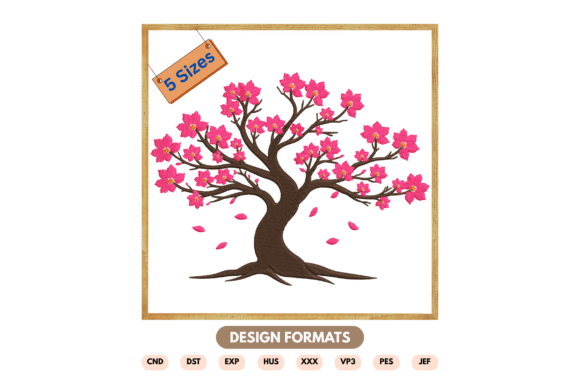
As an embroidery designer who’s developed collections for small clothing brands and Etsy sellers over the past decade, my first glance at the Cherry Blossom Tree Embroidery Design landed right where it should: on mood and intention. This isn’t a busy filler motif or a minimalist line drawing—it’s a graceful, breathing composition. The brown trunk feels grounded and organic, the branches flow with gentle rhythm, and the pink blossoms carry soft dimension without overwhelming density. It reads as feminine but not saccharine, elegant but not stiff, and unmistakably spring—not just seasonally appropriate, but emotionally resonant. For boutique apparel, that nuance matters. It signals care in curation, not just decoration.
How It Performs Across Key Apparel Applications
Let’s talk real-world use—not theory. I tested placement options mentally (and later on scrap fabric) across common boutique items:
- Sweatshirt embroidery: Ideal for left-chest placement on neutral heather grey or oatmeal sweatshirts. The trunk anchors the design, while blossoms radiate upward—creating visual lift without competing with pocket lines or seams.
- Hoodie design: Works beautifully centered just below the collar seam on the back. The flowing branches adapt well to curved surfaces when digitized thoughtfully—and this Creative Fabrica embroidery file handles curvature gracefully in mockups I reviewed.
- Sleeve accents: A scaled-down version (check if alternate sizes are included or easily rescaled) adds subtle storytelling to raglan sleeves—especially on pastel hoodies where the pink thread pops against mint or lavender.
- T-shirt embroidery: Best on midweight cotton or tri-blend tees with light stabilizer backing. Avoid ultra-thin jersey unless you reinforce with tear-away + cut-away combo—the blossom clusters benefit from stability.
- Denim jackets & tote bags: The trunk’s texture reads strongly on rigid fabrics. On denim, it gains rustic charm; on canvas totes, it becomes a signature lifestyle motif—perfect for printable mockups aimed at Instagram or Etsy listings.
Where Precision Matters Most
This design shines—but only when applied with awareness of its structure. The clustered blossoms create natural stitch density zones, especially near branch tips. That means:
- On stretchy fabric like French terry or lightweight fleece, use medium-weight cut-away stabilizer and avoid placing directly over high-movement areas (e.g., underarm seams).
- For ribbed fabric (like textured hoodie cuffs), test stitch alignment first—branches crossing ribs can distort if hooping isn’t perfectly flush.
- On dark garments, confirm your thread colors contrast cleanly. The description mentions “vibrant pink blossoms”—but verify actual thread recommendations in the Creative Fabrica embroidery product details. Some pinks mute on black; others pop. Always test.
- Don’t force it into tiny chest placements (<5” width). The trunk and branching structure need breathing room. At under 3.5”, detail blurs and flow collapses.
Design Integrity Meets Commercial Value
What makes the Cherry Blossom Tree Embroidery Design more than just pretty? It builds trust. Customers browsing a handmade product or small shop product recognize intentional design—not clip art masquerading as craft. When placed consistently across a seasonal collection (e.g., matching sweatshirts, totes, and denim jackets), it strengthens brand identity without shouting. There’s no logo, no slogan—just quiet confidence in the motif itself. That consistency translates directly to customer engagement: repeat buyers remember the feeling of that branch curve, that petal scatter. It becomes part of your visual language.
For Etsy sellers and creative entrepreneurs, this also streamlines content creation. Use it across lifestyle product photos—drape a cherry-blossom-embroidered hoodie over a wicker chair beside fresh florals, layer it in flat lays with ceramic mugs and linen napkins. The design supports storytelling, not distraction. And because it’s rooted in a universally recognized symbol of renewal, it avoids trend fatigue—making it viable beyond this spring season.
Practical Notes Every Embroidery Designer Should Run Through
Before cutting into your first batch of premium french terry or launching that Etsy listing, take these steps:
- Test on scrap fabric—ideally the exact garment type you’ll use. Sweatshirt fleece behaves differently than cotton twill.
- Review stabilizer choice. Light cut-away works for stable knits; medium-weight is safer for stretchy or napped fabrics.
- Confirm hoop size and whether the design fits comfortably within your machine’s throat space—especially for back-of-hoodie placements.
- Inspect stitch density in the blossom clusters. If they feel overly dense for your fabric weight, consider slight underlay reduction (if editing capability exists in your software).
- Compare placement options using printed templates or digital overlays—chest, sleeve, back, and even pocket flap—to see where the branch flow feels most natural.
- Check Creative Fabrica product details thoroughly: licensing scope (personal vs. commercial embroidery), included file formats, and any notes about recommended thread colors or resizing limits.
Final Thoughts for the Intentional Creator
The Cherry Blossom Tree Embroidery Design doesn’t try to be everything. It’s not bold enough for streetwear logos, nor minimal enough for Scandinavian essentials—but it’s exactly right for the thoughtful creator building a boutique brand around warmth, seasonality, and tactile authenticity. It elevates a basic sweatshirt into something personal. It turns a standard tote into a keepsake. And for the embroidery shop or small production studio, it’s a reliable, emotionally intelligent asset—one that performs across fabric types, scales well in mockups, and supports long-term visual consistency. In a market flooded with generic florals, this design earns its place by balancing delicacy with structure, beauty with wearability, and trend-awareness with timelessness. That’s not just embroidery—that’s intentional design.