Japanese Zen Garden Embroidery Design
A Calm, Elegant Anchor for Seasonal & Holiday Collections
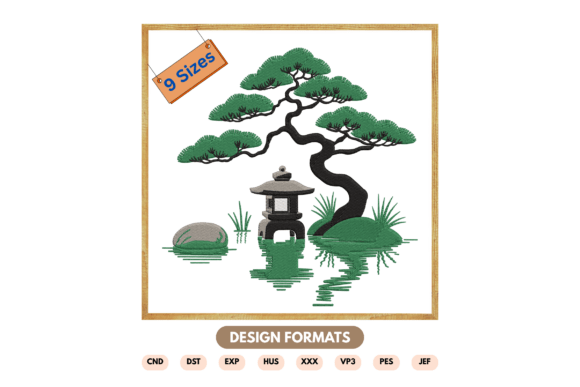
As an embroidery designer who’s built dozens of seasonal shop collections—from cozy winter loungewear drops to spring gift bundles—I approached the Japanese Zen Garden Embroidery Design with quiet anticipation. Not for flash or festivity, but for its rare ability to ground a holiday collection in stillness. This isn’t a “festive” design in the traditional sense—no glitter, no snowflakes, no bold greetings. Instead, it delivers elegance, intention, and emotional resonance: a stylized bonsai tree, a weathered stone lantern, smooth rocks, and soft water reflections—all rendered with refined line work and balanced negative space. It reads as modern, spiritual, and premium—not rustic or playful, not nostalgic or cute. That makes it unexpectedly powerful for holiday shoppers seeking meaningful, non-cluttered handmade gifts.
Where This Design Truly Shines: Real-World Holiday Product Use
The Japanese Zen Garden Embroidery Design excels where calm meets craftsmanship. On sweatshirt embroidery, it transforms a basic pullover into a mindful statement piece—ideal for yoga studios, wellness brands, or family matching sets (think coordinating hoodies for parents and teens). As a tote bag design, it elevates everyday errands into quiet rituals—perfect for boutique gift shops or eco-conscious Etsy sellers bundling with soy candles or matcha kits. For kitchen towel embroidery, its clean lines hold up beautifully against linen or cotton terry, offering serene visual relief in busy holiday kitchens. It also works elegantly on pillow covers, aprons, and table linens, lending cohesion to curated home decor collections.
For holiday gifting, this design shines in personalized gift contexts: pair it with monogrammed initials on a baby blanket or stitch it onto a linen ornament sleeve for a minimalist tree accent. As an embroidered patch, it’s ideal for limited-edition apparel drops—sew it onto denim jackets or canvas backpacks for craft fair appeal. Social media previews perform well too: its balanced composition translates cleanly into printable mockups and Instagram carousels, helping small shop owners communicate quality and intention without over-explaining.
Use With Intention: Where Caution Is Key
This design’s elegance comes with practical considerations. Its layered details—especially the fine lines suggesting water ripples and lantern texture—require attention at small hoop size settings. Avoid cramming it onto tiny areas like wristbands or child-sized socks unless you’ve tested the stitch density thoroughly. On thick fabrics like heavy kitchen towels or dense fleece, under-stabilization can mute detail; use cutaway or tear-away stabilizer generously and test on scrap first.
Dark fabric demands thoughtful thread colors: matte charcoal or deep forest green threads enhance the Zen mood, but avoid overly shiny metallics—they clash with the design’s organic serenity. Likewise, skip metallic thread unless you’re aiming for subtle shimmer on lantern edges—and even then, test wash durability. The design’s gentle curves don’t adapt well to highly stretchy garments (like performance knits) or curved surfaces like baseball caps without significant digitizing adjustments. And while it fits beautifully in the Forest category, don’t force botanical literalism—this is symbolic, not illustrative.
Seasonal Appeal That Builds Trust & Value
Holiday shoppers are emotionally fatigued. They scroll past noise and land on authenticity. The Japanese Zen Garden Embroidery Design cuts through clutter by offering emotional contrast: peace instead of pressure, simplicity instead of saturation. That builds customer trust—especially among buyers of wellness-focused or slow-living products. Its consistent visual language supports brand consistency across product types (e.g., same design on a pillow cover and matching tea towel), reinforcing recognition and perceived value.
It also boosts giftability. Unlike trend-driven motifs, this design feels timeless—appropriate for housewarmings, new parents, retirements, or sympathy gifts beyond the holiday window. That extends your seasonal collection’s lifespan. For Etsy sellers, listings featuring this design often see higher engagement on “quiet luxury” or “mindful gifting” tags, and customers frequently mention how the design “feels special” in reviews—a subtle but powerful signal for algorithm visibility.
Practical Designer Notes Before You Stitch
- Test thread colors on both light and dark fabric—subtle grays, muted greens, and warm taupes often outperform stark black or white.
- Check stitch density before scaling: high-density areas (like lantern base or rock clusters) may need reduced fill or adjusted underlay on delicate fabrics.
- Confirm hoop size compatibility with your target products—especially for small items like ornaments or baby onesies.
- Use proper stabilizer based on fabric texture: cutaway for knits, tear-away for stable wovens, and lightweight fusible for sheer linens.
- Create realistic mockups—not just flat digital renders, but draped photos showing drape and scale on actual sweatshirts or towels.
- Review small details after stitching: ensure water reflection lines remain distinct and lantern texture reads clearly—not muddy or fused.
- Plan matching color palettes across your collection: think neutral-toned packaging, coordinating gift tags, and cohesive social media visuals.
- Confirm commercial licensing before selling finished seasonal products—this is essential for any digital embroidery file used in commercial embroidery.
The Japanese Zen Garden Embroidery Design isn’t just another holiday embroidery option—it’s a strategic tool for standing out in a saturated market. When used intentionally, it turns functional items into heirloom-caliber handmade gifts, strengthens brand voice, and meets real shopper needs: beauty without busyness, meaning without message overload. For small shop owners, crafters, and Etsy sellers building thoughtful seasonal offerings, this machine embroidery design earns its place—not as filler, but as foundation.