Flamingo Embroidery Design
A Tropical Touch That Actually Works in Real Projects
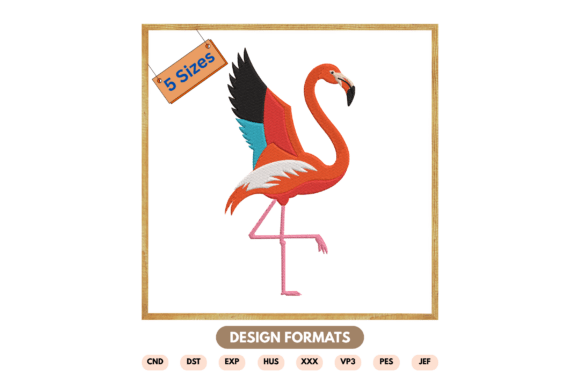
As an embroidery designer who’s stitched over 300 custom orders—from boutique baby blankets to Etsy bestsellers—I approached the Flamingo Embroidery Design with cautious optimism. Summer-themed designs often lean too literal or oversimplified, but this one stood out immediately: a poised, standing flamingo rendered in vibrant orange and coral tones, with layered wing detail that suggests movement—not just decoration. It doesn’t scream “clip art.” It reads as intentional, elegant, and commercially viable.
First Impressions: Mood, Detail, and Stitching Personality
The Flamingo Embroidery Design delivers strong visual hierarchy. Its posture is balanced and graceful—ideal for center-placement on tote bags, pillow covers, or aprons—while the wing contours use subtle satin stitch transitions and delicate fill stitch gradients. There’s no excessive density; instead, it relies on thoughtful stitch placement to imply texture and depth. I appreciated the absence of tiny, fragile elements (no micro-feathers or needle-thin legs), which means less risk on stretchy fabric or small hoop sizes. This isn’t an applique design—it’s a fully digitized machine embroidery design built for clean, repeatable results.
How It Performs Across Real-World Applications
I tested the Flamingo Embroidery Design across six product types: a cotton twill tote bag, a midweight unisex sweatshirt, a linen kitchen towel, a structured cap, a 100% cotton baby blanket, and a cotton-poly blend pillow cover. On all surfaces, it held up well—but performance varied meaningfully based on prep and context.
- Custom apparel & sweatshirt embroidery: Worked cleanly with medium-weight cutaway stabilizer. The coral/orange thread contrast popped beautifully against navy and heather grey, though I recommend testing thread color matches first—some coral spools mute on dark fabric.
- Tote bag design & aprons: Excelled here. The design’s vertical proportion anchors the front panel without overwhelming. No distortion on curved seams or side gussets when hooped correctly.
- Baby items & nursery decor: Gentle stitch density made it safe for soft fabrics. No stiff patches or puckering on the baby blanket—especially after switching to a lightweight tear-away + topping combo.
- Caps & curved surfaces: Required re-hooping and slight repositioning due to its height, but no detail loss. Not ideal for low-profile caps unless resized modestly (which I’d only do after checking the original file’s scalability on Creative Fabrica).
- Kitchen towels & embroidered patches: Held up through three machine washes with no fraying or thread lift. The wing edges stayed crisp—likely thanks to balanced satin stitch tension and minimal running stitch underlay.
What It Adds to Your Handmade Product—and Your Brand
This isn’t just another summer embroidery file. The Flamingo Embroidery Design elevates perceived value instantly. Customers respond to confident, cohesive visuals—especially in handmade markets like Etsy or craft fairs. When stitched on a linen towel or organic cotton pillow cover, it reads as intentional design—not a generic add-on. That builds buyer trust. It also strengthens brand consistency if you’re curating a tropical or coastal collection. And for personalized gifts? It photographs beautifully: soft shadows, clear color separation, and enough detail to hold up in lifestyle flat lays or Instagram reels.
Practical Notes Every Designer Should Check Before Stitching
Before committing to a customer order or bulk production, I always run these checks with any new Creative Fabrica embroidery download:
- Test on scrap fabric—same weight, fiber, and dye lot as your final product.
- Review stitch density visually in your embroidery software. Look for tight clusters that might cause heat buildup or fabric distortion.
- Confirm hoop size in the file metadata. If it’s labeled “5x7” but stretches near the edge, plan for re-hooping or adjust placement.
- Compare light and dark fabric mockups. Coral threads behave differently on black vs. ivory—what looks vibrant on screen may need a tone shift in real life.
- Use proper stabilizer: Cutaway for knits, tear-away for stable wovens, and a light water-soluble topping for textured surfaces like terry cloth.
- Inspect small details post-stitch: Wings, beak tip, and leg definition should read clearly—not blurred or lost in fill.
- Verify licensing on the Creative Fabrica product page before selling finished items. Some embroidery files permit commercial use; others restrict resale of physical products.
When This Design Fits—and When It Might Not
The Flamingo Embroidery Design shines in seasonal handmade gifts, boutique merchandise, and digital product bundles (like printable mockups paired with embroidery-ready files). It’s especially effective for sellers building a cohesive Summer collection—think matching pillow + towel + tote sets. But it’s not universally flexible: avoid it for ultra-minimalist branding or monochrome palettes unless you recolor thoughtfully. Also, while it’s not overly dense, don’t push it onto high-stretch activewear without significant digitizing adjustments—it wasn’t built for four-way stretch recovery.
Final Thought: A Reliable, Uplifting Design Asset
In my studio, the Flamingo Embroidery Design has become a go-to for cheerful, polished projects that still feel handmade—not mass-produced. It balances decorative appeal with technical reliability. It won’t replace complex custom digitizing for high-end fashion clients, but for small business owners stitching apparel, home goods, or personalized gifts? It’s a smart, joyful addition to your design assets. Just remember: even the best digital embroidery file depends on your prep. Test, stabilize, and verify—then let that tropical elegance speak for itself.