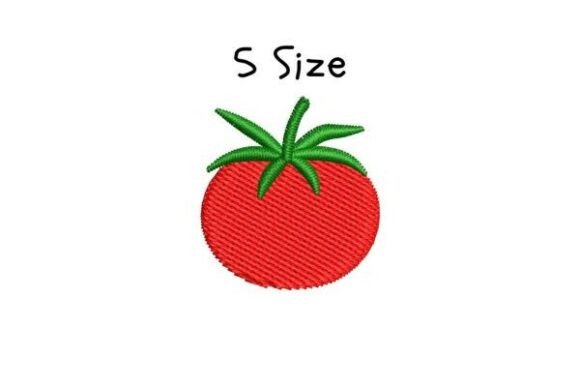
Tomato Embroidery Design
A Practical Review for Small Business Merch & Branded Patches
As an embroidery designer who’s developed logos and motifs for cafés, bakeries, florists, pet brands, and handmade studios over the past 12 years, I approach every digital embroidery file with two questions: Will it translate cleanly across real-world fabrics and applications? And Does it strengthen brand identity—not just decorate? That’s why I tested the Tomato Embroidery Design across multiple business use cases before recommending it to clients or adding it to my own design assets library.
First Impression: Friendly, Fresh, and Professionally Versatile
The title alone—Tomato Embroidery Design—immediately signals warmth, authenticity, and food-adjacent charm. It doesn’t feel overly cartoonish or sterile; instead, it strikes a balance between rustic appeal and clean execution—ideal for small businesses that want to communicate quality, care, and approachability. Whether you’re a farm-to-table café, a boutique jam maker, or a sustainable florist using tomato vines as a subtle motif, this machine embroidery design reads as intentional, not incidental. It’s not just decorative—it’s brand-aligned.
Real-World Performance Across Merchandise Types
I ran the Tomato Embroidery Design through five high-demand commercial embroidery scenarios:
- Embroidered patches: Works beautifully at all five included sizes. At 2”–2.5”, it holds shape on twill backing without puckering—especially when paired with medium-weight cutaway stabilizer. Perfect for sew-on or iron-on branding on tote bags, aprons, or staff jackets.
- Apron embroidery: Positioned on the chest or lower pocket, the design reads clearly even on textured canvas or linen blends. Its balanced fill-to-outline ratio prevents thread buildup in high-wear zones.
- Cap embroidery: At 2” wide, it fits cleanly on structured front panels. The stem detail remains legible without excessive stitch density—critical for curved surfaces where distortion can blur fine lines.
- Tote bag design: On natural cotton or canvas totes, the tomato motif adds artisanal credibility without overwhelming the fabric. It scales well for both minimalist branding (single-color thread) and vibrant storytelling (multi-thread greens and reds).
- Product packaging accents: When stitched onto reusable produce bags, jar sleeves, or gift tags, it elevates perceived value—turning functional items into branded, handmade products customers photograph and share.
Where to Use It Thoughtfully
This isn’t a one-size-fits-all motif—and that’s a strength, not a limitation. For best results, avoid pushing the Tomato Embroidery Design into contexts where clarity or durability is compromised:
- Under 1.5”: At tiny patch sizes, the vine or leaf details may lose definition—test first on your target fabric.
- Dark uniforms with low-contrast thread: Red thread on black fabric can mute vibrancy. Opt for matte or heathered reds—or pair with bright green stem/leaf thread for visual lift.
- Frequent-wash items: While the design itself is stable, always use tear-away + cutaway stabilizer combo on t-shirts or work shirts to prevent backing migration after laundering.
- Textured or napped fabrics: Fleece, terry cloth, or heavy burlap require extra hooping care and denser underlay. Run a sample before bulk production.
How It Builds Brand Identity—Not Just Visuals
Small businesses don’t buy embroidery files—they invest in recognition, trust, and consistency. The Tomato Embroidery Design supports that investment by offering instant visual cohesion: it’s recognizable at a glance, scalable across touchpoints (from cap front to product tag), and emotionally resonant for food-adjacent or nature-forward brands. When customers see it on your staff’s aprons, your tote bags at farmers’ markets, or your limited-run workshop swag, it reinforces authenticity—not just aesthetics. That consistency builds familiarity. Familiarity builds loyalty.
Designer Notes You Can’t Skip
Before stitching your first batch of small business merch, here’s what I do—and recommend you do—with the Tomato Embroidery Design:
- Test in black and white first: Print a monochrome mockup to assess silhouette strength and spacing—no color distraction.
- Check small-patch viability: Load the smallest size into your embroidery software and zoom in. Are inner curves clean? Does the stem separate clearly from the fruit?
- Review thread color contrast: Red on red won’t read. Match thread to your fabric’s tone—not just its base color.
- Inspect spacing and density: Look for tight corners or overlapping fills that could cause thread breaks or fabric distortion during commercial embroidery runs.
- Confirm hoop compatibility: Ensure the largest size fits your standard hoops—especially if you’re running batches on multi-needle machines.
- Test on real fabric: Not muslin—your actual tote canvas, apron twill, or cap twill. Stabilizer choice changes everything.
- Create a printable mockup: Show clients how it’ll look *in context*—not just as a file preview.
- Compare beside other design assets: Does it harmonize with your logo, typography, and secondary icons? Consistency starts with alignment.
- Verify commercial licensing: Since this is a digital embroidery file intended for small business merch, confirm usage rights cover resale, client projects, and branded patch production.
The Tomato Embroidery Design stands out because it’s built for purpose—not just prettiness. It bridges the gap between food-themed charm and professional embroidery standards. For Etsy sellers launching handmade product lines, apparel decorators building local brand partnerships, or creative studios designing cohesive merch systems, it’s more than a motif. It’s a versatile, scalable, and trustworthy piece of your brand’s visual language—ready to stitch, scale, and sell.