Sleeping Bunny Outline Embroidery
First Impressions: A Quiet, Confident Silhouette
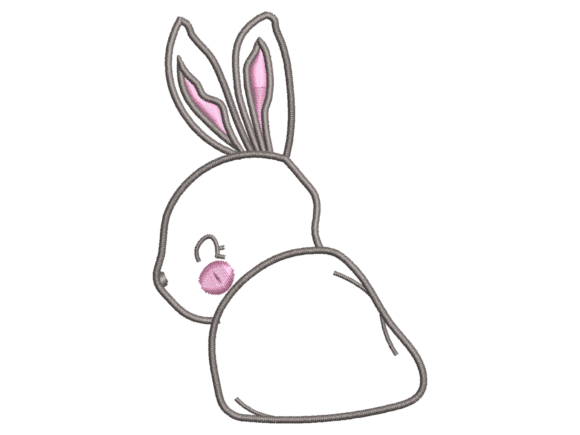
As an embroidery designer who’s stitched hundreds of boutique apparel projects—from linen tees for slow-fashion labels to heavyweight hoodies for seasonal drops—my eye lands instantly on the mood of a design. Sleeping Bunny Outline Embroidery delivers exactly what its name promises: a tender, single-contour line drawing of a curled, resting bunny. There’s no fill stitching, no interior detail, no shadow or gradient—just one clean, continuous outline. That restraint is intentional, and it’s powerful. It reads as calm, unhurried, and quietly sophisticated—not cutesy, not cluttered, not overly literal. The curve of the ear, the gentle dip of the back, the subtle taper of the paw—it all suggests hand-drawn warmth, but with machine-embroidery precision.
How It Lives on Sweatshirts: Texture, Tone & Placement
This design thrives where fabric and form meet meaningfully. On a natural oatmeal French terry sweatshirt? It whispers elegance—soft contrast, zero visual competition. On charcoal heather or deep navy fleece? It pops with quiet confidence, especially when stitched in matte ecru or stone-gray thread. Pastel heathers (dusty rose, sage, butter) invite tonal stitching—same-color thread that reads as a subtle embossed contour rather than graphic pop. And on oversized hoodies? That’s where Sleeping Bunny Outline Embroidery truly shines: centered just below the collarbone, it anchors the chest without dominating; placed low on the left sleeve cuff, it becomes a quiet signature detail for the discerning wearer.
It’s equally effective as a back design on cropped or relaxed-fit styles—scaled slightly larger, it becomes a serene focal point against open space. For seasonal collections (think cozy fall layers or spring loungewear), this outline doesn’t shout “season”—it breathes with it. It feels handmade without looking DIY, premium without feeling stiff, and playful without sacrificing refinement.
Design Personality: Minimalist, Not Minimal
Let’s be clear: Sleeping Bunny Outline Embroidery isn’t “minimalist” in the sterile, corporate sense. It’s minimal with intention. It carries warmth, softness, and narrative—sleep, stillness, innocence—all in a single unbroken line. That makes it deeply versatile for boutique brands: feminine but not fussy, rustic but not folksy, decorative but never loud. It leans into quiet storytelling—a perfect match for lifestyle-focused Etsy sellers, small shop product lines built on authenticity, and custom apparel studios curating emotional resonance over trend-chasing.
Practical Considerations for Commercial Embroidery
Before pressing “stitch,” here’s what every embroidery professional should assess:
- Thread color contrast: Because it’s an outline, legibility hinges entirely on contrast. On dark fabric, opt for high-contrast thread (ivory, bright white, or even pale gold). On light or pastel fabric, consider tonal stitching for subtlety—or go bold with black, navy, or forest green for graphic impact.
- Stitch density & fabric thickness: As a single-outline design, stitch density is inherently low—ideal for thick, napped fabrics like fleece or loopback cotton. No risk of puckering or stiffness. That also means it stitches quickly, reducing production time per piece—a real advantage for limited drops.
- Stabilizer choice: Medium-weight cutaway or tear-away works beautifully. With minimal stitching, there’s little pull on the fabric, so even lightweight stabilizers hold up well on stable knits. Always test on your exact sweatshirt fabric first—especially if using eco-blends or textured organics.
- Small-size readability: At under 3 inches wide, the outline remains crisp and recognizable. Below 2 inches, fine curves may soften slightly depending on thread weight and machine tension—so verify clarity at your intended chest or sleeve size before bulk production.
- Hoop placement & washing durability: Its clean shape adapts smoothly to standard hoop sizes. And because there’s no dense fill or satin borders to fray, the finished product holds up beautifully through repeated washing—critical for trusted handmade product longevity.
Why This Design Strengthens Your Boutique Brand
Sleeping Bunny Outline Embroidery isn’t just a machine embroidery design—it’s a brand amplifier. When customers see it on your sweatshirt listing, it signals care: care in curation, care in execution, care in restraint. That builds buyer trust faster than any description. On Etsy, it elevates your small shop product above generic clipart-style animal motifs. In lifestyle product photography, it adds quiet narrative weight—imagine it nestled beside a ceramic mug and worn-in denim jacket, bathed in morning light. As a digital embroidery file, it integrates seamlessly into your design assets library, ready for mockup previews, social media teasers, or limited-edition capsule drops.
For apparel decorators and embroidery shops, it’s a reliable, scalable asset—no complex digitizing adjustments needed, no multi-step color changes, no stabilizer recalibration. It works across fabric types, fits, and branding tones. And for creative entrepreneurs building a cohesive visual identity? This outline becomes a repeatable motif—on tags, packaging, or even printable mockup backdrops—that reinforces recognition without repetition fatigue.
Final Notes Before You Stitch
Digital embroidery files are delivered in ZIP or RAR format. This is a digital product, no physical item will be shipped. Instant download after purchase. No returns or refunds for digital products.
Always verify hoop size compatibility, stitch count (if provided by the creator), and licensing terms before commercial embroidery use. If those details aren’t included with your Sleeping Bunny Outline Embroidery download, reach out to the seller—clarity here protects both your brand and your production integrity.
In a market saturated with busy graphics and over-digitized animals, Sleeping Bunny Outline Embroidery stands apart—not by shouting, but by breathing. It’s the kind of embroidery file that doesn’t just decorate apparel. It invites pause. It earns attention. And for a boutique brand, that’s not just design—it’s distinction.