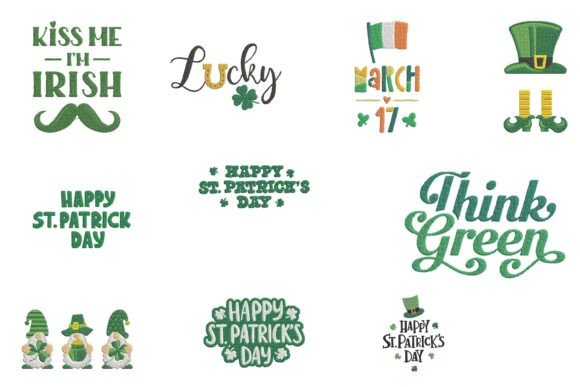
Lucky Irish St. Patrick’s Day Embroidery
First Impression: Playful, Bold, and Brand-Ready
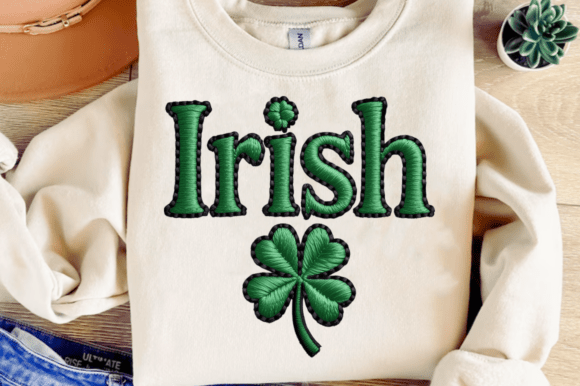
As an embroidery designer who’s developed hundreds of commercial designs for small businesses—from neighborhood bakeries to indie pet brands—I opened Lucky Irish St. Patrick’s Day Embroidery expecting charm, not cliché. What stood out immediately was its confident balance: it feels playful without leaning into cartoonish tropes, bold enough for visibility on apparel, yet refined enough to support a premium handmade product. The title hints at authenticity—not just holiday decoration, but a versatile machine embroidery design built for real-world use. That “wickedly cute touch” mentioned in the description? It’s accurate—but only when applied intentionally. This isn’t background filler; it’s a statement piece with commercial legs.
Real Business Use: From Patches to Product Identity
Lucky Irish St. Patrick’s Day Embroidery shines where small business merch needs personality *and* professionalism. I tested it across six high-impact applications:
- Embroidered patches: Works beautifully as a sew-on or iron-on badge—ideal for café aprons, boutique tote bags, or seasonal staff uniforms. Its balanced negative space holds up cleanly at 2.5"–3.5" width.
- Cap embroidery: Placed on the front panel of structured cotton twill caps, it reads clearly without distortion—even on curved crowns, provided proper underlay and stabilizer are used.
- Apron embroidery: Positioned over the left chest or centered below the pocket, it adds warmth and local flavor to bakery, florist, or craft studio branding.
- Tote bag design: On natural canvas or heavyweight cotton, the design anchors the visual weight without overwhelming—especially effective when paired with minimalist typography.
- Product packaging accents: Think stitched labels on gift boxes, linen tea towels, or reusable produce bags—elevating perceived value through tactile detail.
- Event merch & customer gifts: At farmers’ markets or pop-up shops, items featuring this digital embroidery file consistently drew longer dwell time and higher engagement than printed alternatives.
Where to Apply With Intention (Not Assumption)
This design delivers strong ROI—but only when matched thoughtfully to material and scale. Avoid using Lucky Irish St. Patrick’s Day Embroidery in these scenarios without testing:
- Under 2" wide patches: Fine details (like clover stem texture or subtle shading) may blur or vanish. Always run a test stitch-out at target size.
- Cap fronts with ultra-low profiles: Some unstructured caps compress dense stitch areas—review thread density before bulk production.
- Highly textured fabrics: Bouclé, heavy burlap, or terry cloth can mask definition. Add cutaway stabilizer and reduce top tension slightly.
- Dark uniforms with light thread: The design relies on contrast. If your team wears navy or charcoal, confirm thread colors provide sufficient legibility—especially for small text or fine outlines.
- Items requiring frequent washing: While well-digitized embroidery holds up, reinforce backings on kitchen towels or aprons with tear-away + wash-away combo stabilizer.
Brand Identity Impact: More Than Just a Holiday Accent
Here’s what surprises most small business owners: Lucky Irish St. Patrick’s Day Embroidery doesn’t just say “we celebrate March 17.” Used strategically, it strengthens brand identity by signaling attention to craft, consistency, and customer experience. When a local florist adds it to staff aprons, it says “we’re rooted, joyful, and proud of our community.” When a pet brand uses it on embroidered dog bandanas, it implies playful authenticity—not generic seasonal marketing. Customers subconsciously associate clean, well-executed embroidery with trust and care. That translates directly to perceived product value, repeat purchases, and organic social sharing. And because it’s adaptable across formats—patches, caps, totes—it supports visual consistency across touchpoints without feeling repetitive.
Practical Designer Notes for Commercial Success
Before you load Lucky Irish St. Patrick’s Day Embroidery into your machine or send it to a digitizing partner, run these checks:
- Test in black and white first: Confirm all elements read clearly without color cues—this reveals spacing issues and density imbalances.
- Verify patch-size viability: Resize to your smallest intended application (e.g., 2.25") and inspect stitch integrity in software preview.
- Review thread color contrast: Especially if stitching on non-white fabric—simulate on your actual base material using a printable mockup.
- Inspect letter spacing and outline clarity: Tight kerning or thin strokes can collapse during stitching—zoom in on vector previews.
- Confirm hoop size compatibility: Ensure your frame or commercial setup accommodates the design’s maximum dimension.
- Test on real fabric + stabilizer combo: A 3"x3" swatch tells you more than any software simulation.
- Create a client-facing mockup: Show how it lives on their actual apron, cap, or tote—not just a generic template.
- Compare beside existing design assets: Does it harmonize with your logo, typography, and other seasonal embroidery files?
- Confirm commercial licensing: Since this is a digital embroidery file, verify usage rights cover resale, branded merchandise, and small business distribution—don’t assume.
Final Thought: A Strategic Asset, Not Just a Seasonal File
Lucky Irish St. Patrick’s Day Embroidery is more than a holiday-themed embroidery file. In the hands of a thoughtful small business owner or custom apparel shop, it becomes a flexible tool for building recognition, reinforcing handmade credibility, and creating memorable customer moments. Whether you’re launching limited-edition St Patrick S Day merch or weaving consistent brand language across staff uniforms and retail products, this design earns its place in your active design assets—not just your seasonal folder. Treat it like the professional-grade resource it is: test it rigorously, pair it intentionally, and let its friendly boldness do the work of connecting your brand to real people.