Ire and Ice Heart Embroidery Design
First Impressions: Bold Contrast, Quiet Confidence
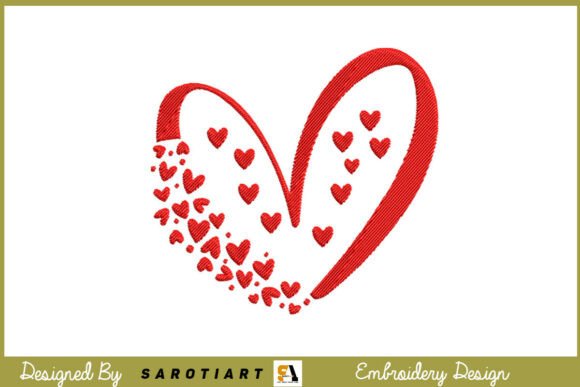
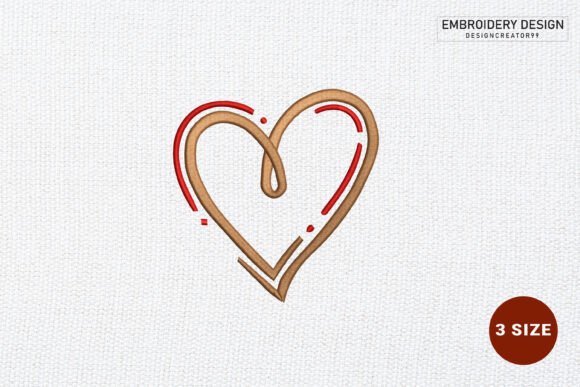
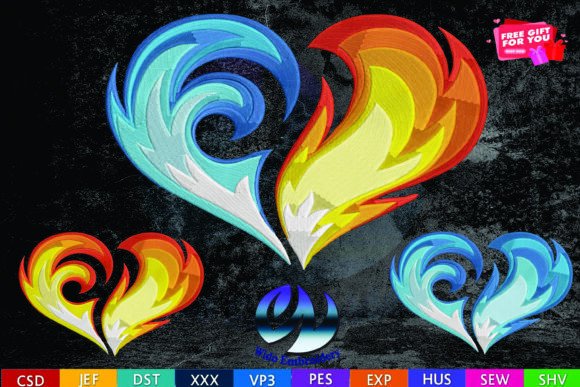
Opening the Ire and Ice Heart Embroidery Design file feels like unboxing a small, intentional gesture — not flashy, but charged with quiet duality. The heart isn’t cutesy or overly romantic; it’s stylized with sharp, clean lines where flame-like curves meet crisp, geometric frost edges. There’s no clutter, no excessive embellishment — just two opposing forces held in balance inside one shape. As a designer who’s stitched hundreds of hearts for Valentine’s Day projects, I appreciate how this avoids cliché while still landing emotionally. It reads as mature, thoughtful, and quietly expressive — perfect for someone who wants love to feel real, not saccharine.
A Real Project Test: Custom Tote Bags for a Local Boutique
Last week, I prepped three limited-run embroidered tote bags for a downtown boutique launching a “Love in All Forms” collection — think partners, friends, self-love, chosen family. I chose Ire and Ice Heart Embroidery Design for the center panel of each bag (medium size, 4.2" wide), stitching on midweight natural canvas with black thread and light tear-away stabilizer. The result? Crisp, legible, and surprisingly dimensional — the satin stitch along the flame edge caught light just enough, while the icy side used subtle fill stitch gradients that didn’t overwhelm the fabric texture. Customers paused. They touched the stitching. One asked, “Is that *fire* and *ice*? That’s so us.” That kind of reaction — immediate recognition plus personal resonance — is rare in holiday embroidery. It’s not just decoration; it’s conversation-starting design.
Where It Shines (and Where It Needs Care)
The Ire and Ice Heart Embroidery Design works beautifully on structured, stable surfaces: sweatshirt embroidery, pillow covers, tea towels, and quilt blocks all hold its contrast well. As an applique design, it’s especially strong on tote bags and denim jackets — the bold outline anchors the piece without needing heavy underlay.
But here’s what I watched closely:
- Small hoop sizes: The smallest version (1.8") loses definition in the flame tip and frost points — fine for a baby onesie chest placement if you’re confident in your machine’s precision, but test first.
- Textured or stretchy fabric: On ribbed knit baby caps or lightweight jersey tees, I added cut-away + topping and reduced stitch density slightly. Without that, the icy edges blurred slightly.
- Dark fabric: Works powerfully in white or silver thread — but avoid pale pastels unless you’re using high-contrast stabilizer underneath. The design relies on clarity, not subtlety.
- Curved surfaces (like caps): The medium and large sizes require careful digitizing adjustments — the original file wasn’t cap-optimized, so I resized and rehooped manually. Not a flaw, just a note: treat it as a flat-surface-first design.
Design Integrity Meets Commercial Reality
As an Etsy seller and small shop product developer, I judge embroidery files not just by beauty, but by how they impact perceived value and buyer trust. Ire and Ice Heart Embroidery Design elevates handmade product presentation because it looks intentional, not generic. When stitched cleanly, it signals craftsmanship — the balanced stitch density avoids that “overstuffed” look some holiday embroidery falls into. And because it’s offered in five sizes and ten formats, it scales across my catalog: tiny for baby embroidery on burp cloths, large for quilt block centers, and medium for custom apparel. That flexibility saves time when building digital embroidery file bundles or printable mockups for social media listings.
It also supports brand consistency. If your craft business leans minimalist, modern, or emotionally nuanced (not just “cute”), this design reinforces that voice — whether on a holiday embroidery gift tag or a boutique apron line. Customers don’t buy hearts — they buy meaning. Ire and Ice Heart Embroidery Design delivers that without saying a word.
Practical Designer Notes Before You Stitch
Before committing to a client project or production run, do these six things:
- Test the embroidery file on scrap fabric matching your final substrate — especially if using textured, dark, or stretchy material.
- Check thread color contrast in both natural and artificial light; black-on-navy can recede, while silver-on-gray may vanish.
- Review stitch density in the flame’s inner curves and frost tips — dense areas can pucker thin fabrics.
- Confirm hoop size compatibility — the largest version likely needs a 5x7 hoop minimum.
- Inspect small details at 200% zoom in your embroidery software — make sure no running stitch elements are misaligned or overly sparse.
- Verify licensing terms before selling finished products or bundling the digital embroidery file — the listing says “You MUST have an embroidery machine,” but doesn’t clarify commercial use rights.
Final Thought: A Heart That Holds Space
Valentine’s Day embroidery too often defaults to sweetness or sentimentality. Ire and Ice Heart Embroidery Design dares to be different — and succeeds because it’s grounded in strong design fundamentals: rhythm, contrast, restraint, and emotional honesty. It’s not just for February. I’ve already stitched it onto a linen kitchen towel for a wedding gift (“for the couple who argues passionately and makes up beautifully”) and used the smallest size as a subtle embroidered patch on a denim jacket lining. That versatility — from holiday embroidery to year-round design assets — is what makes it worth keeping in your active library. It doesn’t shout. It resonates. And in a crowded market of machine embroidery designs, that kind of quiet strength is exactly what handmade product buyers remember.