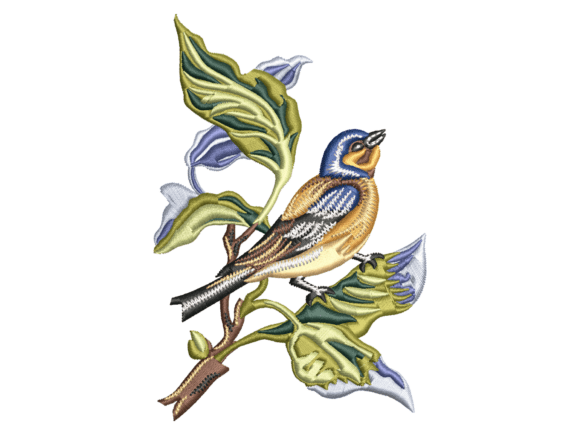
Blue Tit on Bellflower Embroidery
A Gentle, Timeless Touch for Meaningful Handmade Gifts
As an embroidery designer who’s stitched thousands of personalized pieces—from newborn onesies to heirloom wedding towels—I was immediately drawn to the Blue Tit on Bellflower Embroidery. It’s not flashy or oversized, but quietly confident in its charm: a delicate blue tit perched among soft bellflower blooms, rendered with thoughtful line weight and gentle curvature. There’s no harsh geometry here—just organic flow, subtle layering, and a hand-drawn warmth that reads as authentically handmade. It feels sweet without being cloying, elegant without stiffness, and quietly romantic—perfect for gifts meant to be cherished, not just displayed.
Where This Design Truly Shines
The Blue Tit on Bellflower Embroidery excels where emotional resonance matters most. For baby embroidery, it brings quiet joy—a tiny blue tit symbolizing resilience and new beginnings, nestled beside bellflowers (often associated with gratitude and constancy). Stitch it onto organic cotton swaddles, bamboo receiving blankets, or muslin nursery wall hangings, and it becomes more than decoration—it becomes a whispered promise.
For wedding gifts, this design elevates everyday items into keepsakes. Imagine it embroidered on linen hand towels for the couple’s first shared bathroom, or on velvet pillow covers for their guest room. It’s refined enough for formal settings but soft enough to feel personal—not generic, not overly floral, not too bird-heavy. It bridges tradition and tenderness.
Etsy sellers and small shop owners will appreciate how effortlessly it translates across product categories: on canvas tote bags for spring markets, on linen aprons for artisanal bakeries, or on cotton tea towels for bridal shower favors. Its balanced scale (neither too sprawling nor too minuscule) makes it highly adaptable—ideal for custom gift boxes, embroidered keepsake cards, or printable mockups used to showcase your shop’s aesthetic before stitching begins.
Practical Uses Across Your Creative Workflow
- Baby embroidery: Works beautifully on stretchy knit onesies when paired with light cutaway stabilizer and reduced top tension.
- Wedding gift: Elevates monogrammed towel sets or linen napkins with a nature-inspired accent that feels intentional, not incidental.
- Nursery decor: Translates well to framed hoop art, crib mobiles (with secure backing), or quilt block accents.
- Embroidered towel: Holds up cleanly on terry cloth when using medium-weight tear-away + topping—bellflower petals retain definition without sinking.
- Pillow cover & blanket embroidery: Looks especially lovely on textured oatmeal linen or brushed cotton; the design’s modest density prevents stiffness.
- Custom home decor: Adds character to lampshades, drawer pulls, or ceramic coaster sleeves (when applied via fabric transfer).
- Craft fair & Etsy listings: Photographs exceptionally well—soft colors and clear outlines create strong visual cohesion in flat lays and lifestyle shots.
What to Watch For: Real Embroidery Considerations
This isn’t a “stitch-and-forget” design—and that’s a good thing. Its quiet detail demands attention, which ultimately lifts the perceived quality of your finished product. The blue tit’s eye, wing feathering, and bellflower stamens are finely rendered, so stitch density matters. On dense fabrics like thick fleece blankets or heavy terry, test first: you may need to reduce stitch count slightly or adjust underlay to prevent puckering.
Dark fabric? No problem—but confirm your thread colors complement contrast. Light blues and soft purples pop against charcoal or navy, while cream or ecru threads lend vintage warmth on natural linens. Always compare thread swatches *before* stitching the final piece; monitor color shifts under different lighting, especially for Etsy product photos.
Stabilizer choice is non-negotiable here. For lightweight cottons (like baby onesies or tea towels), use a lightweight cutaway. For textured towels or loosely woven linens, combine medium tear-away with a light water-soluble topping to preserve petal edges. And yes—hoop size matters. Review the file details on Creative Fabrica before downloading: know your required hoop dimensions to avoid awkward repositioning mid-stitch.
Why It Builds Trust—and Keeps Customers Coming Back
When customers see the Blue Tit on Bellflower Embroidery on your handmade product, they don’t just see stitching—they see care. That careful balance of nature and nurture, simplicity and detail, makes buyers pause. It signals intentionality. In a market flooded with bold fonts and cartoon motifs, this design stands out by *not* shouting. It invites closeness. That translates directly to higher perceived value, better photo engagement, and stronger emotional connection—especially for sentimental purchases like baby gifts or wedding keepsakes.
For Etsy sellers, that means fewer questions about “Is this really handmade?” and more comments like “I can tell this was made with love.” For commercial embroidery projects—say, custom nursery sets for boutique hotels or branded staff aprons for cafés—it adds a signature touch that feels curated, not templated.
Your Next Steps Before Stitching
- Create a test stitch-out on fabric identical to your final project—even if it’s just a scrap.
- Check small details after stitching: are bellflower centers crisp? Does the blue tit’s beak read clearly?
- Compare thread colors in natural light and indoor light—some blues shift dramatically.
- Test on similar fabric with your intended stabilizer combo—don’t assume what works on denim will work on velveteen.
- Confirm hoop size and machine compatibility—Creative Fabrica lists these in the product details.
- Review stitch density in your embroidery software—if it exceeds 18,000 stitches, consider simplifying for delicate fabrics.
- Double-check licensing on Creative Fabrica before selling finished products—commercial use terms vary per designer.
The Blue Tit on Bellflower Embroidery isn’t just another machine embroidery design. It’s a quiet collaborator in your creative process—elevating baby embroidery with tenderness, giving wedding gifts quiet significance, and helping small shop owners stand out through sincerity over spectacle. When stitched thoughtfully, it transforms ordinary textiles into meaningful handmade products. And in today’s handmade marketplace, that’s not just valuable—it’s essential.